
One of the most persistent myths about fire sprinkler systems is that when one sprinkler activates, every sprinkler in the building activates. In reality, that is not how modern sprinkler systems work.
For developers, building owners, and general contractors, understanding how sprinkler activation works is important. It explains why properly designed sprinkler systems can control fires quickly while limiting water discharge and minimizing disruption to the rest of the building.
Under NFPA 13, sprinkler heads are designed to activate individually when heat from a fire reaches the sprinkler's temperature rating. Because activation occurs only near the fire, many incidents are controlled by one or two sprinkler heads before the fire department arrives.
Understanding what actually triggers a fire sprinkler helps explain why these systems are both highly effective and exceptionally reliable.
The Real Trigger: Heat
Fire sprinklers are heat-activated devices, not smoke detectors.
Each sprinkler head contains a small heat-sensitive element that holds the water valve closed. When surrounding temperatures rise high enough, that element fails, allowing water to discharge from the sprinkler head.
Two common activation mechanisms are used.
Glass Bulb Sprinklers
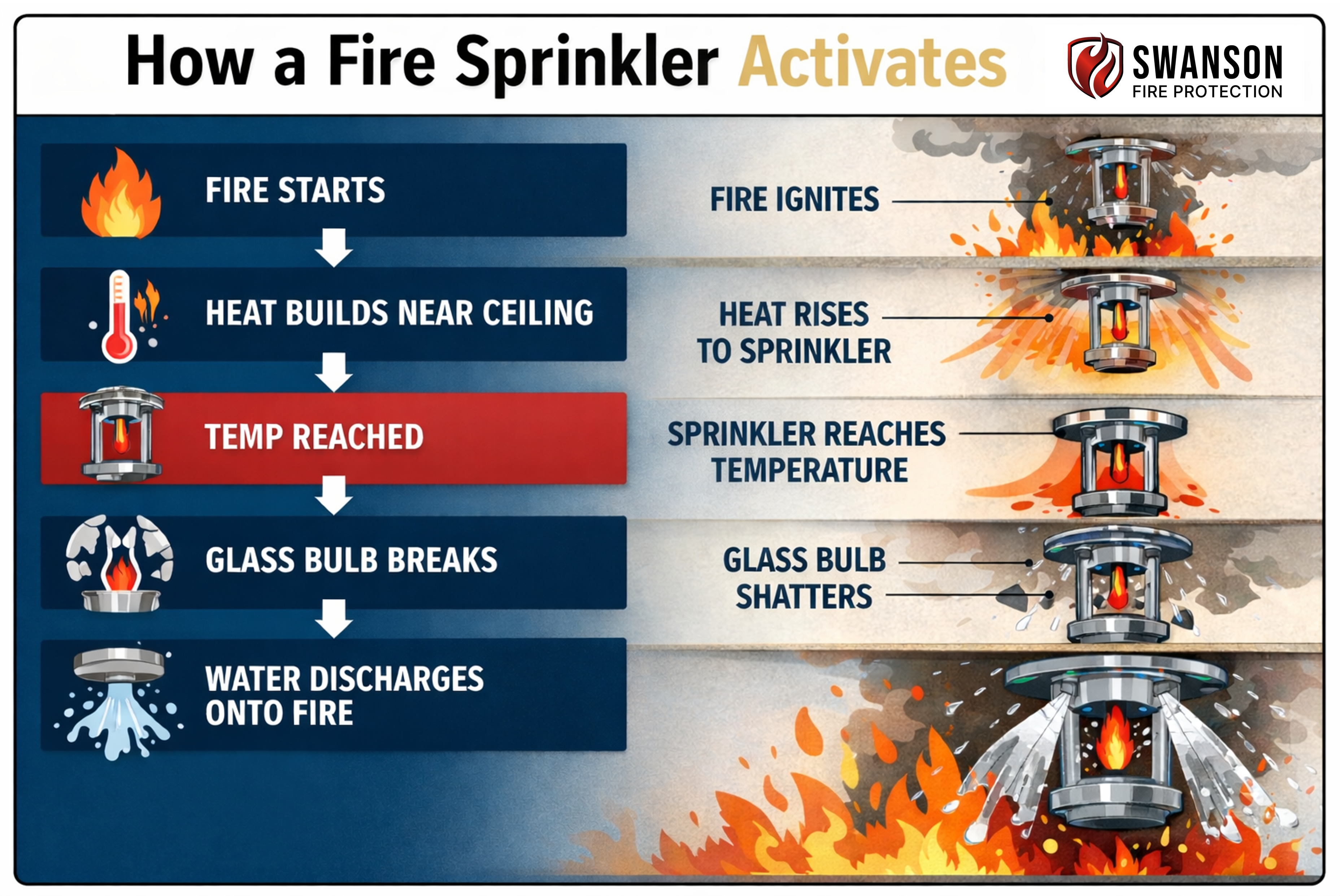
Most modern sprinkler heads use a glass bulb filled with a heat-sensitive liquid.
When exposed to rising temperatures:
- Heat causes the liquid inside the bulb to expand
- Pressure builds inside the sealed glass bulb
- The bulb eventually shatters
- The sprinkler valve opens and water flows
The water then strikes a deflector plate, which spreads it in a controlled spray pattern designed to suppress the fire.
Fusible Link Sprinklers
Some sprinkler heads use a fusible metal link rather than a glass bulb.
These links are engineered to melt at a specific temperature. Once the metal link melts, the sprinkler head releases and water is discharged.
While glass bulbs are more common today, both designs perform the same function: they release water when exposed to sufficient heat from a fire.
Typical Fire Sprinkler Activation Temperatures
Most sprinkler heads activate between 135°F and 165°F, depending on the environment in which they are installed.
Typical temperature ratings include:
| Temperature Rating | Typical Application |
|---|---|
| 135–155°F | Residential, offices, commercial buildings |
| 165–212°F | Kitchens, mechanical rooms |
| Higher ratings | Industrial environments with elevated ambient heat |
These temperature ratings ensure sprinklers do not activate during normal building conditions, while still responding quickly when a fire produces significant heat.
Understanding how temperature ratings affect sprinkler performance is part of understanding how fire sprinkler systems operate overall. For a deeper explanation, see How Fire Sprinkler Systems Work.
Why Smoke Does NOT Trigger Fire Sprinklers
Another common misconception is that smoke activates fire sprinklers.
In reality, smoke detection and sprinkler activation serve different purposes.
- Smoke detectors activate the fire alarm system, alerting occupants and initiating evacuation procedures.
- Fire sprinklers activate when heat from a fire reaches the sprinkler's temperature rating.
This design prevents unnecessary water discharge caused by:
- cooking smoke
- steam from showers
- dust or airborne particles
- minor smoke events
Only a fire producing sustained heat near the ceiling will activate a sprinkler head.
Do All Fire Sprinklers Go Off at Once?
No.
In a professionally designed sprinkler system, only the sprinkler heads closest to the fire activate.
Because hot air rises, heat from a fire concentrates near the ceiling above the fire. Only sprinkler heads exposed to sufficient heat reach their activation temperature.
Fire incident data consistently shows that most fires are controlled by one or two sprinklers.
This targeted activation is one of the reasons sprinkler systems are so effective. It allows the system to:
- control fires quickly
- limit water damage
- prevent fire spread throughout the building
How Activation Works in Different Sprinkler Systems
While sprinkler heads are typically triggered by heat, the way water reaches the sprinkler can vary depending on the system design.
These differences affect how quickly water is delivered once a sprinkler activates, which is why system selection matters during building design.
Wet Pipe Systems
Wet pipe systems are the most common sprinkler system type.
Water is constantly present in the piping. When a sprinkler head activates, water flows immediately from that sprinkler head.
Because there is no delay in water delivery, wet systems provide the fastest fire response and are commonly used in:
- apartments
- office buildings
- schools
- commercial facilities
For a deeper explanation of system mechanics, see How Fire Sprinkler Systems Work.
Dry Pipe Systems
Dry pipe systems are used in environments where pipes can freeze.
Instead of water, the pipes contain pressurized air or nitrogen.
When heat activates a sprinkler head:
- The air pressure is released
- The dry pipe valve opens
- Water fills the piping
- Water discharges from the activated sprinkler
Because water must travel through the piping after activation, dry systems may have a short delay in water delivery.
Dry systems are common in:
- parking garages
- warehouses
- unheated structures
Pre-Action Systems
Pre-action systems add another layer of protection.
These systems require two events before water enters the piping:
- A fire detection system signals a potential fire
- A sprinkler head activates due to heat
This design helps prevent accidental water discharge in environments where water damage could be extremely costly.
Pre-action systems are commonly used in:
- data centers
- museums
- libraries
Each system type responds slightly differently during a fire event. Understanding these differences is an important part of fire sprinkler system design.
What Happens After a Sprinkler Activates
When a sprinkler head activates, several things happen simultaneously:
- Water discharges directly onto the fire
- Water flow switches trigger the building fire alarm system
- The alarm system may notify a monitoring service or the fire department
Water discharge continues until the fire is controlled and the system is shut off by responding personnel.
After activation, the system must be inspected and repaired before returning to service. These post-activation checks are part of the broader inspection process required to keep systems reliable.
Why Fire Sprinklers Are So Effective
Fire sprinkler systems are designed to respond quickly and precisely to fire conditions.
Because sprinkler heads activate individually in response to heat, systems can control fires early while limiting water discharge to the affected area.
This precise response is one of the reasons fire sprinkler systems remain the most reliable and effective fire protection technology used in modern commercial buildings.
Protecting Your Property
Whether you are developing a multifamily residential project, managing a commercial facility, overseeing a government or institutional building, or operating an industrial property, a properly designed and installed fire sprinkler system is one of the most important investments in life safety and property protection.
Routine inspections ensure that sprinkler heads, piping, and water supply remain ready to perform when needed. For existing buildings, retrofits and upgrades can bring older systems into compliance with current codes.
Understanding the project lifecycle and engaging early in the design process helps ensure that your system meets code requirements across jurisdictions. Engaging early in the design process helps ensure that your system meets code requirements across jurisdictions.
For more on how system classification affects project budgets, see our guides on NFPA 13 vs 13R vs 13D differences and fire sprinkler cost drivers in multifamily construction.
Frequently Asked Questions
What temperature triggers a fire sprinkler?
Most sprinkler heads activate between 135°F and 165°F, depending on the sprinkler's design and the environment in which it is installed.
Can smoke trigger a fire sprinkler?
No. Fire sprinklers are triggered by heat, not smoke.
Do all fire sprinklers go off when one activates?
No. Only sprinkler heads exposed to sufficient heat activate. In many fires, one or two sprinklers control the fire.
Can fire sprinklers go off accidentally?
Accidental activations are extremely rare. Sprinkler heads activate only when heat reaches the sprinkler's temperature rating or when a sprinkler head is physically damaged.
Can cooking trigger a fire sprinkler?
Normal cooking heat or smoke will not activate a sprinkler. However, a significant kitchen fire producing enough heat could activate nearby sprinklers.
Conclusion
Fire sprinkler systems activate based on heat, not smoke, and only the sprinkler heads closest to the fire respond. This targeted activation is what makes sprinkler systems one of the most effective and reliable fire protection technologies available.
Contact our team to discuss fire sprinkler design, installation, or inspection for your property.