Types of Fire Sprinkler Systems
Fire sprinkler systems are one of the most effective life-safety technologies ever developed. According to the National Fire Protection Association (NFPA), buildings protected by sprinkler systems experience dramatically lower fire fatalities and significantly less property damage.
But not every building uses the same type of sprinkler system.
Environmental conditions, building use, and hazard levels all influence which system is installed. Engineers and fire protection contractors select different system designs to ensure buildings remain protected in both normal and extreme conditions.
The most common fire sprinkler systems include:
- Wet pipe systems
- Dry pipe systems
- Pre-action systems
- Deluge systems
Understanding how these systems differ helps property owners, facility managers, and general contractors ensure their buildings are protected by the right fire protection technology.
How Fire Codes Determine Sprinkler System Types
Fire sprinkler systems are not chosen randomly. In most commercial buildings, the system type is determined by fire protection codes and engineering design standards.
The primary standards include:
- NFPA 13 – Standard for the Installation of Sprinkler Systems
- NFPA 13R – Residential sprinkler systems
- NFPA 13D – One- and two-family dwellings
These standards guide engineers and fire protection contractors in selecting the appropriate system type based on:
- building occupancy
- hazard classification
- environmental conditions
- freezing risk
- water supply availability
Professional design ensures sprinkler systems provide reliable protection while meeting local fire codes and insurance requirements.
Wet Pipe Fire Sprinkler Systems
Wet pipe systems are the most common type of fire sprinkler system used in commercial buildings.
In a wet pipe system, the sprinkler piping is always filled with pressurized water.
When a sprinkler head activates due to heat, water flows immediately onto the fire.
How Wet Pipe Systems Work
- Pipes remain filled with water at all times
- Heat from a fire activates an individual sprinkler head
- The glass bulb or fusible link breaks
- Water flows directly onto the fire
Because water is already in the piping, wet pipe systems provide the fastest fire suppression response.
Many people believe sprinkler systems activate all at once, but in reality only the sprinkler head exposed to heat activates, allowing water to be directed precisely where it is needed.
Because of their reliability and simplicity, wet pipe systems are typically the first choice for fire protection engineers whenever environmental conditions allow them to be used safely.
Where Wet Pipe Systems Are Used
Wet pipe systems are typically installed in environments where temperatures remain above freezing, including:
- office buildings
- apartment buildings
- hospitals
- schools
- retail buildings
- hotels
Over 90% of sprinkler systems installed today are wet pipe systems.
Dry Pipe Fire Sprinkler Systems
Dry pipe sprinkler systems are designed for buildings where pipes may be exposed to freezing temperatures.
Instead of water, the piping contains pressurized air or nitrogen.
How Dry Pipe Systems Work
- Pipes contain pressurized air or nitrogen instead of water
- A fire activates a sprinkler head
- Air pressure drops inside the pipe
- A dry pipe valve opens
- Water fills the system and discharges from the activated sprinkler
Because water must first fill the piping, dry pipe systems respond slightly slower than wet pipe systems.
Dry pipe systems must be carefully designed to minimize water delivery time, which is why NFPA 13 limits the maximum system size and requires specific valve configurations.
Where Dry Pipe Systems Are Used
Dry pipe systems are commonly installed in areas exposed to freezing temperatures, such as:
- parking garages
- loading docks
- warehouses
- cold storage facilities
- unheated buildings
- exterior canopies
These systems allow buildings to maintain fire protection without risking frozen pipes.
Pre-Action Fire Sprinkler Systems
Pre-action systems are designed for high-value environments where accidental water discharge must be avoided.
Unlike wet or dry systems, pre-action systems require two separate events before water is released.
How Pre-Action Systems Work
- Pipes initially contain air instead of water
- A fire detection system senses smoke or heat
- The detection system opens a pre-action valve
- Water fills the sprinkler piping
- A sprinkler head must also activate before water discharges
This two-step activation helps prevent accidental water damage.
Where Pre-Action Systems Are Used
Pre-action systems are commonly used in locations containing sensitive equipment or valuable assets, including:
- data centers
- museums
- libraries
- archives
- telecommunications facilities
- laboratories
- server rooms
These environments require fire protection while minimizing the risk of accidental water discharge.
Deluge Fire Sprinkler Systems
Deluge sprinkler systems are used in high-hazard environments where rapid fire spread is possible.
Unlike other systems, deluge sprinkler heads are open and do not contain glass bulbs.
How Deluge Systems Work
- Sprinkler pipes are empty under normal conditions
- A fire detection system activates
- A deluge valve opens
- Water flows through all sprinkler heads simultaneously
Deluge systems are designed to quickly flood a hazard area to control fires that could spread rapidly.
Where Deluge Systems Are Used
Deluge systems are commonly found in:
- aircraft hangars
- chemical plants
- power generation facilities
- industrial processing plants
- high-hazard storage areas
These systems are less common in standard commercial buildings but essential for specialized industrial protection.
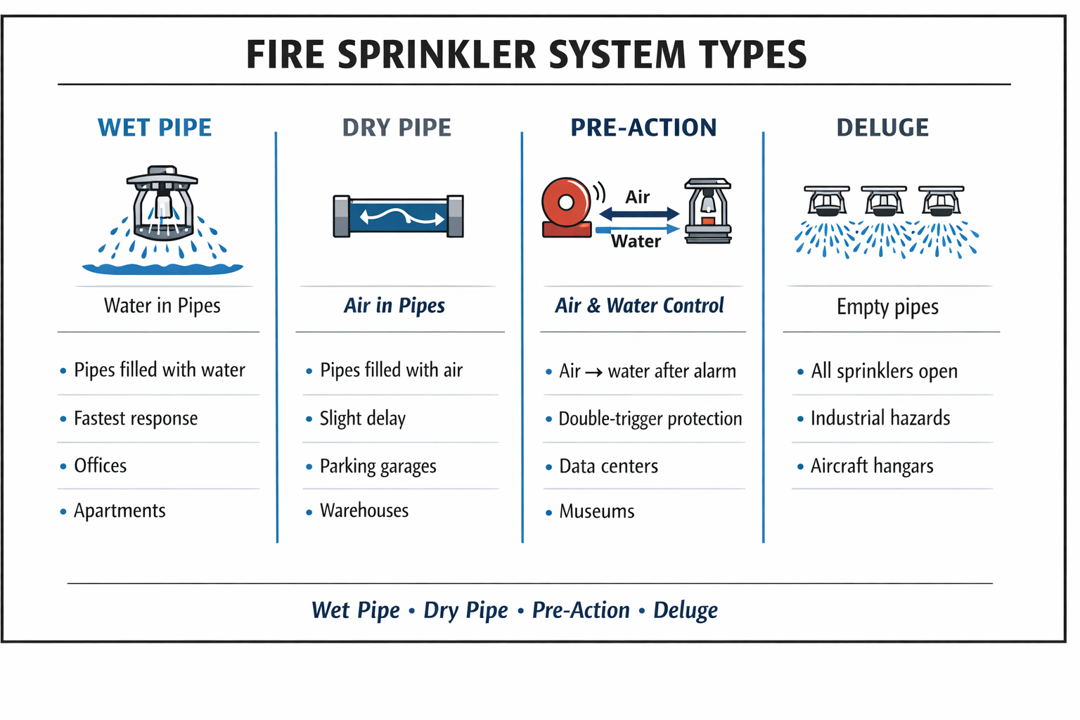
Quick Comparison of Fire Sprinkler System Types
The sections above describe each system type—how it operates and where it is typically used.
Real-World Example: Why Buildings Use Different Systems
Many buildings use multiple types of sprinkler systems depending on environmental conditions.
For example, a commercial building might include:
- Wet pipe systems protecting office spaces
- Dry pipe systems protecting a parking garage exposed to freezing temperatures
- Pre-action systems protecting a data center or telecommunications room
Designing fire protection systems often requires combining technologies to address the risks in different areas of the building.
Which Fire Sprinkler System Is Best?
The best fire sprinkler system depends on building conditions.
Most heated commercial buildings use wet pipe systems because they provide the fastest response and require the least maintenance.
However:
- buildings exposed to freezing temperatures often require dry pipe systems
- facilities containing sensitive equipment may require pre-action systems
- industrial hazards sometimes require deluge systems
Fire protection engineers evaluate building design, hazard classification, and local fire codes to determine the most appropriate system.
Designing the Right Fire Protection System
Selecting the correct fire sprinkler system requires a detailed understanding of building design, fire hazards, environmental conditions, and local fire codes.
Experienced fire protection contractors evaluate these factors to design systems that provide reliable protection while meeting regulatory requirements.
In many commercial buildings, multiple sprinkler system types work together to protect different areas of the structure.
Proper design, installation, and inspection ensure these systems perform exactly as intended when they are needed most.
Why Inspection and Maintenance Matter
Regardless of system type, all fire sprinkler systems must be regularly inspected and tested to ensure they function properly during a fire.
Inspection procedures typically evaluate:
- control valves
- alarm devices
- sprinkler heads
- water pressure
- piping condition
- water supply connections
Routine inspections help identify problems before they compromise fire protection.
Frequently Asked Questions
What are the four main types of fire sprinkler systems?
The four primary types are:
- wet pipe systems
- dry pipe systems
- pre-action systems
- deluge systems
Wet pipe systems are the most common, while deluge systems are typically used in specialized industrial hazards.
Why are wet pipe systems the most common?
Wet pipe systems are simple, reliable, and fast-acting. Because water is already present in the piping, they provide the quickest response to fire conditions.
Why are dry pipe systems used instead of wet systems?
Dry pipe systems are used where temperatures may fall below freezing. Water inside wet pipes could freeze and damage the sprinkler piping.
What makes pre-action systems different?
Pre-action systems require both a detection system and sprinkler activation before water discharges. This design helps prevent accidental water damage in sensitive environments.
Conclusion
Understanding the differences between wet pipe, dry pipe, pre-action, and deluge fire sprinkler systems is essential for selecting the right fire protection strategy for any building.
Each system type serves a specific purpose, and many buildings require a combination of systems to address varying environmental and hazard conditions across different areas.
Whether you are developing a multifamily residential project, managing a commercial facility, overseeing a government or institutional building, or operating an industrial property, a properly designed and installed fire sprinkler system is one of the most important investments in life safety and property protection.
For more on how fire sprinkler systems work, what triggers a sprinkler head, or how NFPA 13, 13R, and 13D differ, explore our resources.
Contact our team to discuss fire sprinkler design, installation, or inspection for your property.